Background and Rationale
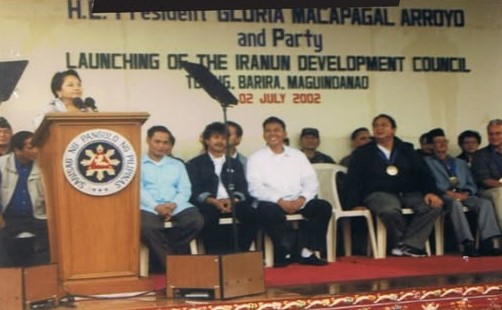
The Iranun Development Council (IDC) was originally formed in 2002 to address post-conflict recovery needs in the wake of the 2001 armed encounter between government forces and the Moro Islamic Liberation Front (MILF). The Council was initially composed of five municipalities—Barira, Buldon, Matanog, Parang, and Datu Blah Sinsuat—which formed the original alliance dedicated to joint development, peacebuilding, and inter-LGU solidarity. However, after a period of inactivity beginning in 2013, the momentum was disrupted, and the alliance’s structures became dormant.
In 2023, calls to revive the IDC began to grow louder. With the establishment of the Bangsamoro Autonomous Region in Muslim Mindanao (BARMM) and renewed efforts to deepen inter-LGU collaboration, the IDC became ripe for revitalization. The Institute for Autonomy and Governance (IAG), a long-time partner of the Iranun alliance, reengaged with the Council and provided technical support for its institutional renewal. This process also led to the inclusion of Sultan Mastura as a new member of the revitalized IDC.
The relaunch of the IDC was officially held on February 19, 2024, at the Iranun Palace in Parang, where the five-member municipalities signed a Memorandum of Agreement committing to a renewed vision of peace, unity, and shared development. This event also marked the inauguration of the new IDC office, signaling a fresh start for the alliance.
The revitalized IDC embraces a new vision:
“A livable Iranun Corridor and the pride of BARMM in the promotion of sustainable development, equality, peace, and justice.”
This vision is supported by an expanded mission that emphasizes collaborative governance, inclusive economic growth, peace and security, environmental sustainability, and cultural preservation.
The Manual of Operations now serves as a foundational guide to ensure that this revitalized alliance operates with transparency, accountability, and shared direction—anchored in the aspirations of the Iranun people.
Legal Basis
The following are the legal foundations for Inter-Local collaboration of the five municipalities:
a. Section 13, Article X of the Constitution; it provides that local government units may group themselves, consolidate or coordinate their efforts, services, and resources for purposes commonly beneficial to them in accordance with law, and Section 33, Article 3, Character III, Title 1, Book I of Republic Act No. 7160, otherwise known as the Local Government Code of 1991, provides that local government units may, through appropriate resolutions, group themselves consolidate, or coordinate their efforts, services and resources for purposes commonly beneficial to them.
b. Section 33 of RA 7160 (Local Government Code), cooperative undertakings among local government units. – Local government units may, through appropriate ordinances, group themselves, consolidate, and or coordinate their efforts, services, and resources for purposes commonly beneficial to them. In support of such undertakings, the local government units involved may, upon approval by the Sangguniang concerned after a public hearing conducted for the purpose, contribute funds, real estate, equipment, and other kinds of property and appoint or assign personnel under such terms and conditions as may be agreed upon by the participating local units through MOA.
c. Section 38, Article II of Bangsamoro Autonomy Act No. 49, or the Bangsamoro Local Governance Code, provides that constituent local government units may, through appropriate ordinances, group themselves, consolidate, or coordinate their efforts, services, and resources for purposes commonly beneficial to them.
d. Section 6, Article IV of Republic Act No. 11054, or the Organic Law for the Bangsamoro Autonomous Region in Muslim Mindanao, provides that the Bangsamoro Government shall promote unity, peace, justice, and goodwill among all people.
Leaders
IDC Chairperson
HON. CAHAR P. IBAY, AL-HAJ
Chairperson, Iranun Development Council
Mayor, Municipality of Parang, Maguindanao del Norte
A dedicated leader who spearheaded the revitalization of the IDC, Mayor Ibay champions sustainable development, transparent governance, and inter-local cooperation. His vision is to build a livable Iranun Corridor that thrives on collaboration, respect, and shared aspirations.
IDC Vice Chairperson
HON. Zohria S. Bansil–Guro
Vice Chairperson, Iranun Development Council
Mayor, Municipality of Matanog, Maguindanao del Norte
Mayor Bansil–Guro pledges full support to the IDC, committing resources and collaboration to uplift the cultural, economic, social, and political well-being of the Iranun people. She advocates for unity (pagkakaisa) and close cooperation with fellow LGUs, BARMM, national agencies, NGOs, and CSOs.
IDC Executive Committee Member
HON. Abdul Rauf D. Tomawis
Executive Committee Member, Iranun Development Council
Mayor, Municipality of Barira, Maguindanao del Norte
Mayor Tomawis emphasizes unity, empowerment, and collaboration as the pillars of Iranun progress. He advocates for dialogue, coordinated development initiatives, and cultural preservation, ensuring that the IDC remains a unifying platform for the Iranun people.
IDC Executive Committee Member
HON. Pahmia A. Manalao
Executive Committee Member, Iranun Development Council
Mayor, Municipality of Buldon, Maguindanao del Norte
Mayor Manalao is committed to effective leadership, transparency, and inclusive community development. Under her guidance, Buldon contributes actively to transforming the Iranun Corridor from a conflict-affected area into a thriving zone of peace, opportunity, and economic promise.
IDC Executive Director
Sultan Saipona Zaman
Executive Director, Iranun Development Council
Sultan Saipona Zaman is a respected Iranun leader and administrator, entrusted with guiding the Council’s vision of unity, peace, and sustainable development. His leadership emphasizes collaboration among municipalities, transparency in governance, and the mobilization of resources for community empowerment. He highlights the Council as a reflection of the Iranun people’s shared dreams and collective desire to shape a better future.