
Overview

The Iranun Development Council (IDC) represents a significant alliance of four Iranun municipalities in Maguindanao del Norte: Barira, Buldon, Matanog, and Parang. The Iranun people, whose name derives from “ira” (residue) and “nun” (people with a distinct culture), possess a rich history and are known for their strong principles, hospitality, navigational prowess, and warrior heritage.
The IDC was formally organized on July 2, 2002, under the leadership of then Parang Mayor Ibrahim Ibay, and was officially launched by then-President Gloria Macapagal Arroyo.
From 2010 onwards, under the leadership of then-Barira Mayor Alexander Tomawis, the IDC began implementing development-oriented programs. Among its key accomplishments during this period were the establishment of the Iranun Communication and Emergency Response Center (IRA511) through Council Resolution No. 05-2010, the creation of the Iranun Supreme Council for Peace and Development (ISCPD) registered with the SEC, the launch of the Iranun Radio Station DXIB (100.7 Khz) in Parang, and the registration of the Iranun Chamber of Commerce and Industry (ICCI).
In 2012, the IDC, in partnership with the Institute for Autonomy and Governance (IAG) and Development Consultant (DevCon), and with support from the Australian Government, Iranun Development Council developed the Iranun Master Plan or SIAD-IAGA, a comprehensive blueprint for sustainable development.
In 2013, the Iranun Development Council entered a period of dormancy due to governance challenges and the lack of peace infrastructure. This inactivity persisted until the establishment of the Bangsamoro Autonomous Region in Muslim Mindanao (BARMM) in 2019, which created renewed opportunities for inclusive governance and inter-LGU development. These developments culminated in the official relaunch of the IDC on February 19, 2024, signaling a new era of unity and collaboration among its member municipalities.
Today, the IDC is poised to serve as a model for inter-LGU cooperation in BARMM.
Vision
A livable Iranun Corridor and the pride of BARMM in the promotion of sustainable development, equality, peace, and justice.
Mission
- Foster a sustainable, inclusive, and resilient economy in Iranun Corridor that empowers communities through education, economic opportunities, livelihood and employment, and the promotion of sustainable agro-agri industrialization.
- Create a vibrant corridor through collaborative governance and inclusive community participation, where the Iranun identity thrives and future generations can live in harmony, dignity, and prosperity.
- Establish a peaceful and secure Iranun Corridor by promoting sustainable peace and order, resolving conflicts through dialogue and mutual respect, and ensuring equitable land management and clear political boundaries.
- Lead sustainable climate action by promoting eco-friendly investments and infrastructure, sustainable agriculture, waste management, and conservation efforts.
- Foster multisectoral partnerships through collaborative initiatives and programs that promote equitable access to quality, inclusive education, enhance community support, and drive sustainable development.
- Improve the quality of health, invest in human capital, and facilitate community empowerment.
- Ensure the sustainability and preservation of cultural identities and religious practices.
- Ensure the development of environmentally compliant infrastructures, such as constructing irrigation systems, establishing efficient water systems, building road networks to enhance connectivity, and investing in renewable energy through research and development.
- Ensure transparency and accountability in local government units, including barangay government units, to uplift the well-being of constituents.
Core Values
- Future-proof
- Inclusivity
- Resilience
- Equity
- Peace, Harmony, and Justice
- Accountability
- Networking and linkages
The IDC Logo
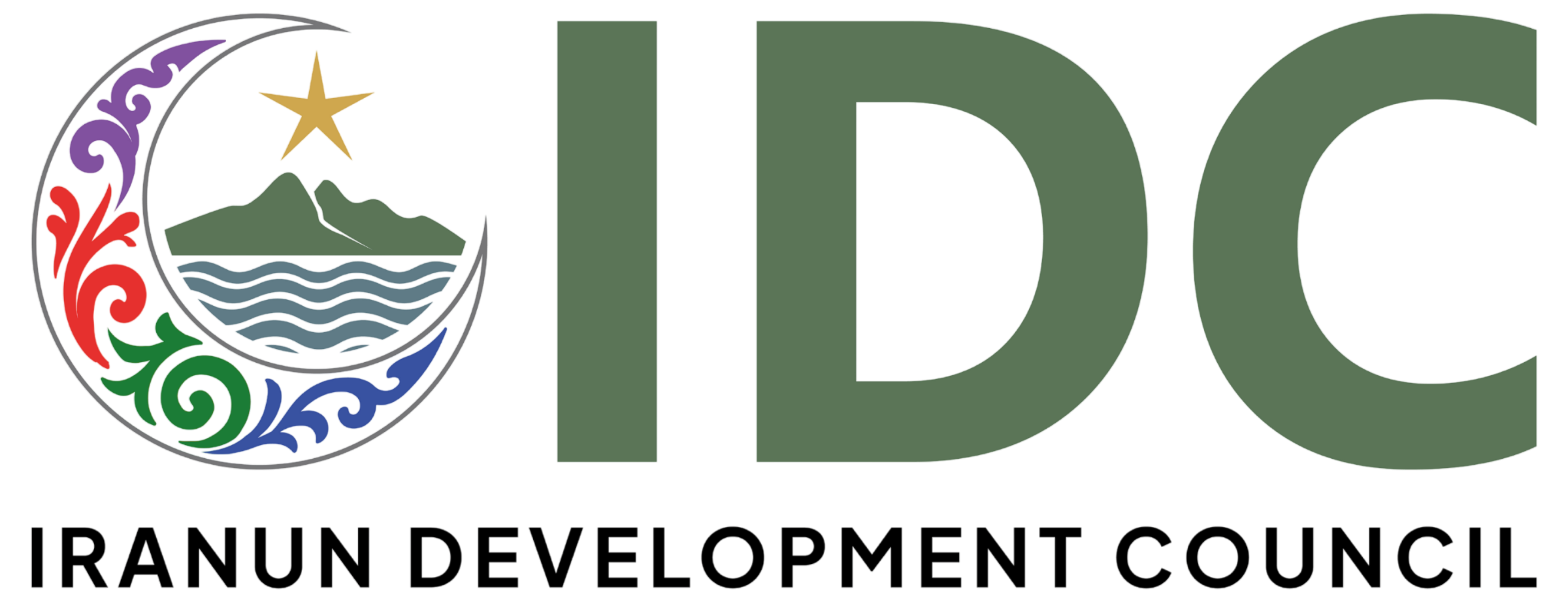
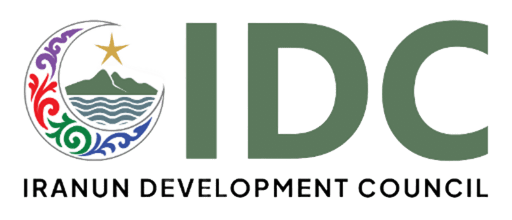
The logo of the Iranun Development Council reflects the cultural identity, governance values, and natural wealth of the Iranun people.

Mountains and Seas at the heart of the emblem represent the abundant natural resources of the Iranun municipalities. The green mountains stand for the rich highlands of Barira and Buldon, while the stylized waves reflect the vital coastal areas of Parang and Matanog. Together, these elements symbolize not only the region’s geographical diversity but also its shared development efforts and collective drive for economic progress.

The golden star above the landscape represents the unified vision of the four municipalities—Barira, Buldon, Matanog, and Parang. It symbolizes leadership, excellence, and hope for the Iranun people. Positioned above the landscape, it serves as a guiding light toward progress and unity.

This emblem also features a crescent moon elegantly adorned with colorful Okir patterns—a tribute to the rich cultural heritage of the Iranun tribe. The crescent encloses the core elements of the Iranun Development Council (IDC), symbolizing unity, peace, and good governance rooted in tradition. Each color within the Okir design represents one of the four municipalities of the IDC Alliance: Purple for Barira, Red for Buldon, Green for Matanog, and Blue for Parang. Together, these colors celebrate the identity and equal representation of each member municipality. The open curve of the crescent signifies inclusiveness, reflecting IDC’s readiness to embrace partnerships and collaborations as it moves forward with a shared vision for sustainable and inclusive development.
Organizational Structure
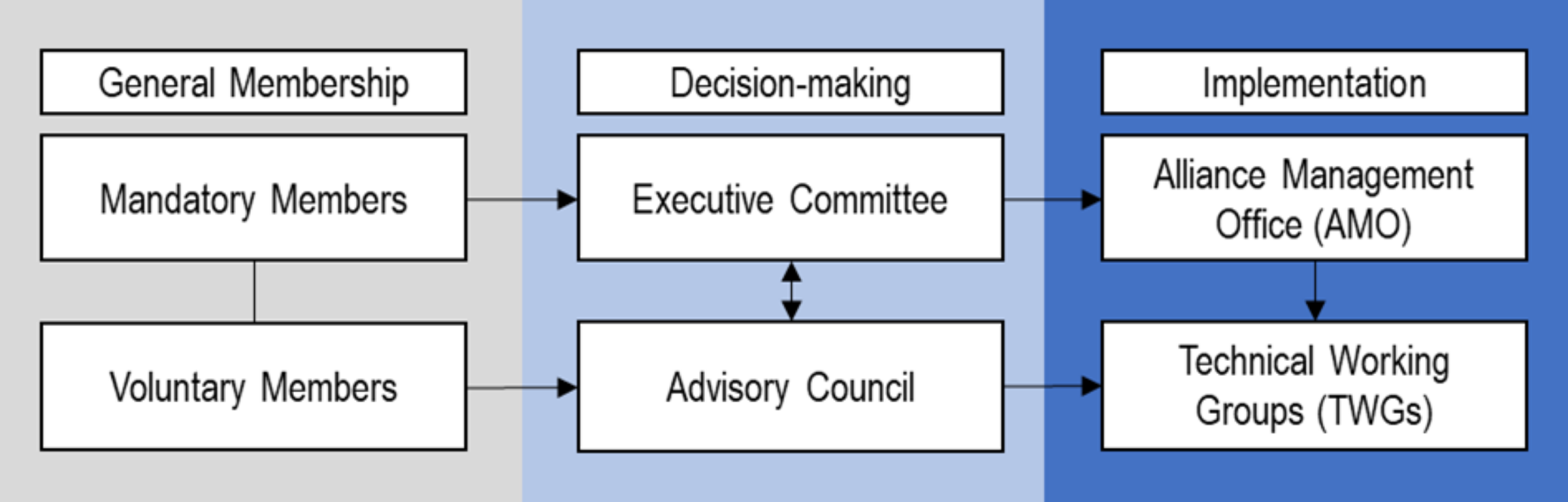
The Council shall, primarily, be composed of the five Local Chief Executives of member-LGUs and are the mandatory members.
Membership
There are two types of membership to the IDC:
- Mandatory Members are the member-LGUs and represented by their respective Local Chief Executives or Mayors.
- Voluntary Members are the sectoral representatives that either request to be members or recommended and endorsed by the Executive Committee. This type of membership will have a fixed term of a year and be subject to renewal every last meeting of the every year by the Executive Committee.
Decision-making
The decisions for the IDC will be made solely by the Executive Committee (ExeCom), which is composed of the Local Chief Executives or Mayors of the member LGUs. Assisting the ExeCom is the Alliance Management Office, which will serve as the Secretariat.
The ExeCom will be supported by the Advisory Council and the Alliance Management Office. Members of the Advisory Council will come from a pool of voluntary members.
Every three years, the ExeCom elects a Chairperson from among its members. The election of the Chairperson takes place in August, following the local elections held in May.
ExeCom members may appoint a permanent alternate from their respective LGUs to represent them when they are unavailable for scheduled meetings.
Implementation
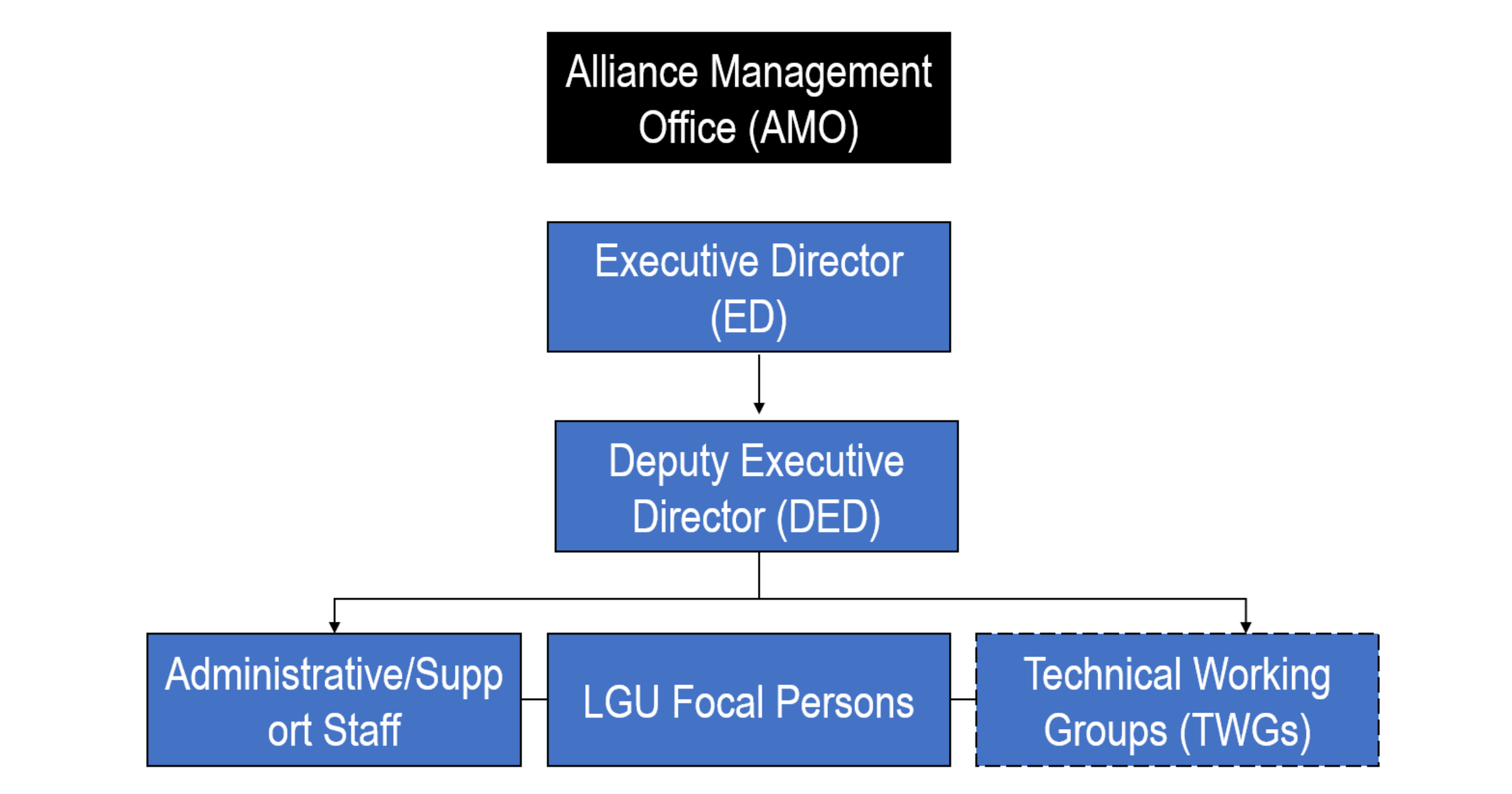
The Alliance Management Office (AMO) serves as the implementing and coordinating body of the Iranun Development Council (IDC). It is composed of key personnel responsible for overseeing day-to-day operations, facilitating inter-LGU collaboration, and supporting the execution of Council initiatives. The AMO is composed of the following:
1. Executive Director (ED)
The Executive Director (ED) shall be appointed by the Executive Committee (ExeCom) through a Council resolution. Nominations may be submitted by any of the member Local Government Units (LGUs) for deliberation. This is a part-time position.
The ED shall receive a monthly honorarium in the amount of ______ in addition to his/her regular salary from the LGU where he/she is employed.
2. Deputy Executive Director (DED)
The Deputy Executive Director (DED) shall also be appointed by the ExeCom through a Council resolution. Nominations may be submitted by any of the member-LGUs. This is likewise a part-time position.
The DED shall receive a monthly honorarium in the amount of ______ in addition to his/her regular salary from the LGU where he/she is employed.
3. Administrative/Support Staff
The administrative/support staff shall be a full-time position to work at the Alliance Management Office and oversee the day-to-day activities in the office.
The salary of the administrative/support staff shall be of the same level as the salary of the similar job description in the LGUs.
4. LGU Focal Persons
Each member-LGU shall designate one (1) main focal person and one (1) permanent alternate. The Focal Persons are the main liaison of the IDC to the LGUs. They will support the implementation of the IDC plans specially in their respective LGUs.
The Focal Persons identified, ideally, for the IDC are the Municipal Planning and Development Coordinators of each member-LGUs. This is subject to the appointment of each LCEs through a written confirmation to the Council. The appointment of the Focal Person is at the discretion of the LCEs as he/she sees fit for the purposes of the alliance.
Technical Working Group
A Technical Working Group (TWG) shall be created to assist the Council in addressing technical and other specialized concerns. Its membership shall be composed of personnel from member-LGUs, duly recommended by their respective Local Chief Executives (LCEs). The TWG shall receive instructions from, and report to, the Chairperson through the Executive Director.